We developed an interactive tool for the energy assessment and optimization of residential buildings for WiD Wohnen in Dresden GmbH & Co. KG. The digital twin makes it possible to analyze different energy systems in real time, configure them individually, and compare them with high accuracy – visually accessible and technically sound.
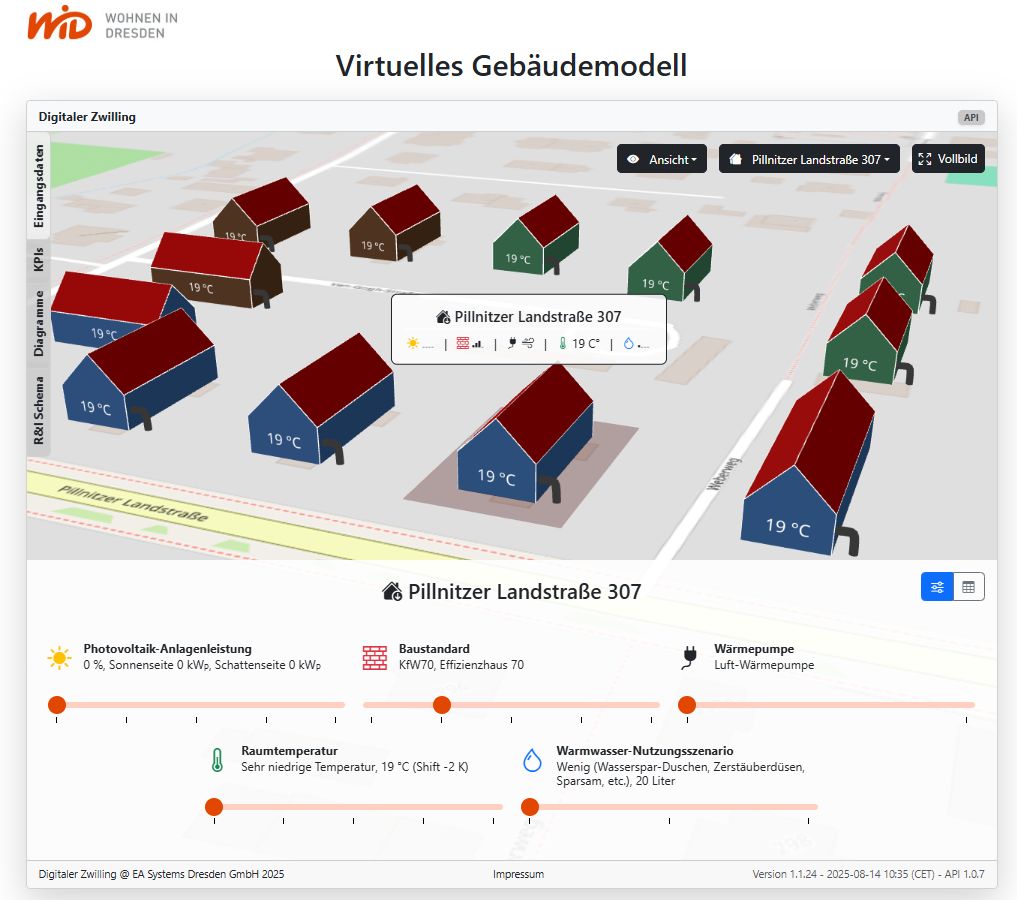
The project aimed to give planners, energy consultants, and municipal decision-makers a transparent, data-based foundation for selecting energy-efficient building services. Users can adjust different system configurations directly in their browser and immediately receive key indicators such as the degree of self-sufficiency, carbon footprint, and electricity and heat balances.
The technical implementation uses a full-stack approach with modern web technology. The frontend provides usability and interactive 3D visualization, while the backend handles calculations using a combination of high-resolution building simulations and machine learning.
Technology in Use
- Frontend: ReactJS (UI), ThreeJS (3D), REST API integration
- Backend: Python, Keras, ML-based regression
- Simulation basis: >3,300 variants of a detailed Modelica model
Modeled Building Services
- PV systems (with variable roof coverage)
- Heat pumps (air-source or geothermal)
- Electric heating element, heating buffer tank, domestic hot water tank
Configurable Parameters
- PV output (0–100%)
- Building standard (GEG, KfW 55/70/85)
- Heat pump type (air-source/geothermal)
- Room temperature (19–23 °C)
- Domestic hot water profile (low to high consumption)
A key feature is the combination of high-fidelity simulation and ML regression. The basis comprises 3,300 physically simulated variants; the trained model enables real-time evaluation of combinations not previously simulated – quickly, with low resource requirements, and with sufficient accuracy.
The tool is particularly suitable for advisory portals, municipal planning, energy consultants, and strategic decision-making in housing companies.
Added Value
- Immediate assessment of complex energy systems
- Intuitive 3D visualization for clearer understanding
- Comparability of different system configurations
- A transparent basis for decisions by specialists and non-specialists
Result
An intuitive, visual, and scientifically grounded tool. It helps make complex energy topics understandable, supporting knowledge transfer, participation, and informed decisions alike.