A digital world calls for digital solutions. From the outset, EA Systems Dresden GmbH has addressed the digitalization of systems and processes and made the digital twin a key part of representing, designing, and optimizing energy processes, as well as its own way of working. The concept behind a digital twin is straightforward: a physical or nonphysical component of a real system, or a real system itself, whether it already exists or not, is modeled so that it can be represented and used in the digital world. The resulting twin can be tested against a wide range of scenarios. The results are valid and transferable to the real system without having to intervene in it.
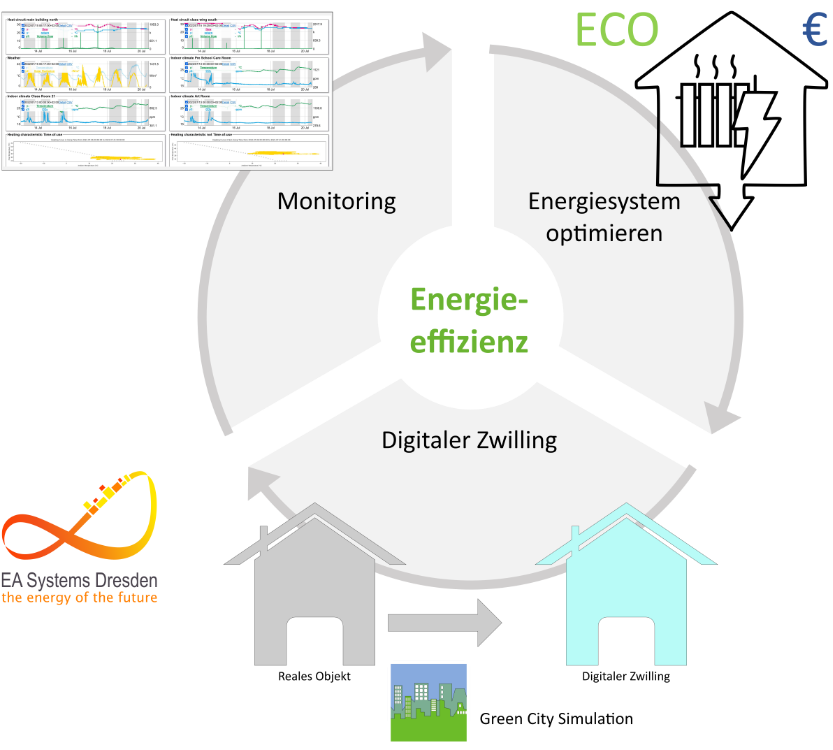
Using the in-house Green City simulation library for SimulationX, EA Systems Dresden GmbH’s engineers model a digital twin of the real system. They account for site-specific and structural characteristics, combined heat and power, and sector coupling. Site- and client-specific model development and the integration of renewable energy are readily supported. Once completed, the digital twin can be maintained over the long term and adapted and extended as circumstances and requirements change.
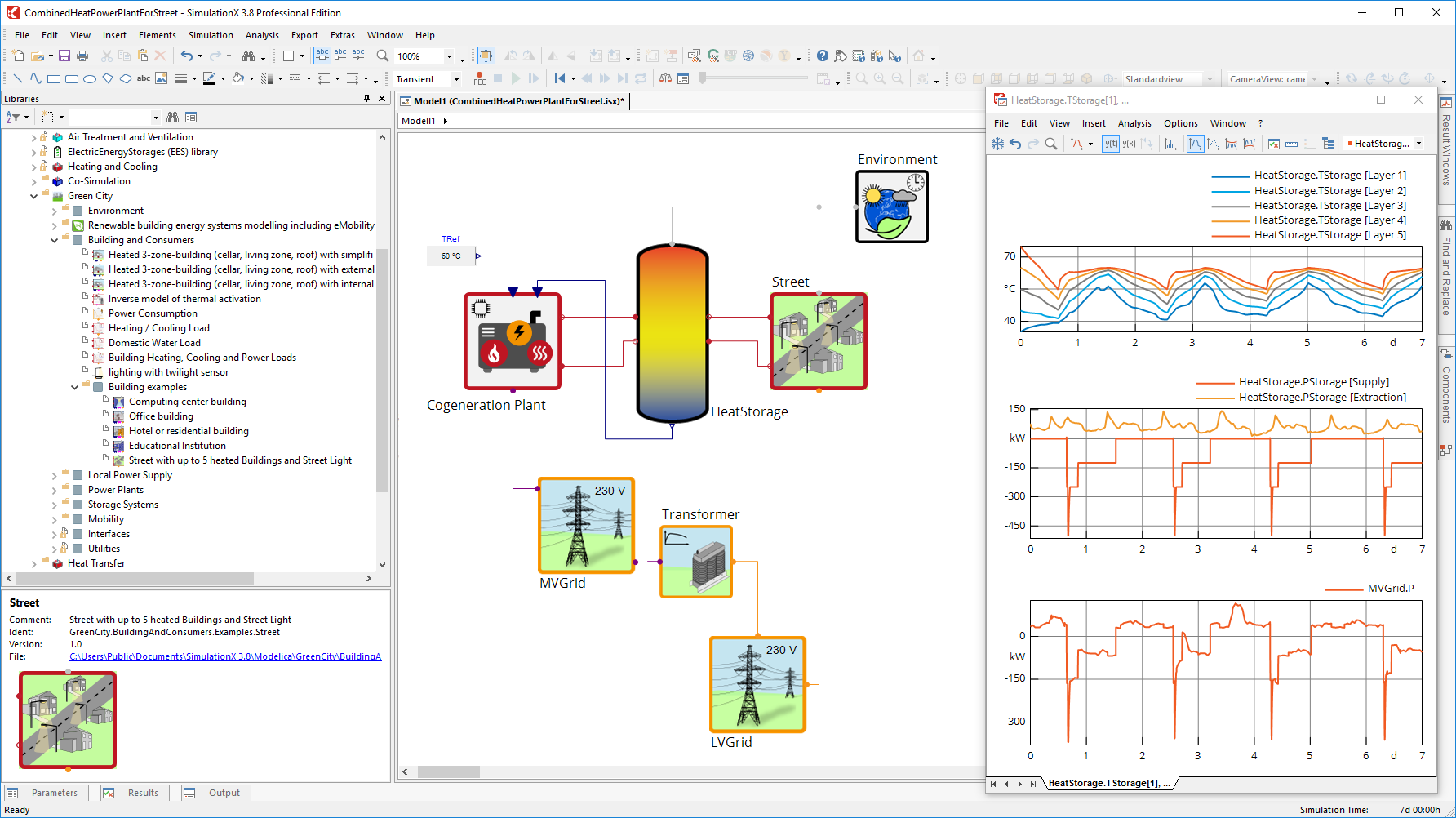
The model in the figure below is a digital twin of a street with five residential buildings. It shows a simplified consumer of space heating, domestic hot water, and electricity, represented by load curves and supplied by a combined heat and power plant. Thermal storage buffers peaks in heat demand. A wide range of analyses and investigations can then be carried out on the digital twin. In this case, energy demand was simulated to determine whether it could be met.
Benefits at a Glance
In summary, a digital twin offers:
- Building services planning
- Model-based assessment and optimization of energy systems
- Integration of electromobility and charging infrastructure, as well as
- Energy storage units and user behavior; comparison of model parameters with measured values and statistics, with import/export of relevant measurement data
- Comparison of energy demand and consumption, as well as operating and investment costs
- SiL and HiL testing, individual model development, and system integration
- Connection of your own controller applications to the open-standard Modelica ® interfaces of our Green City components