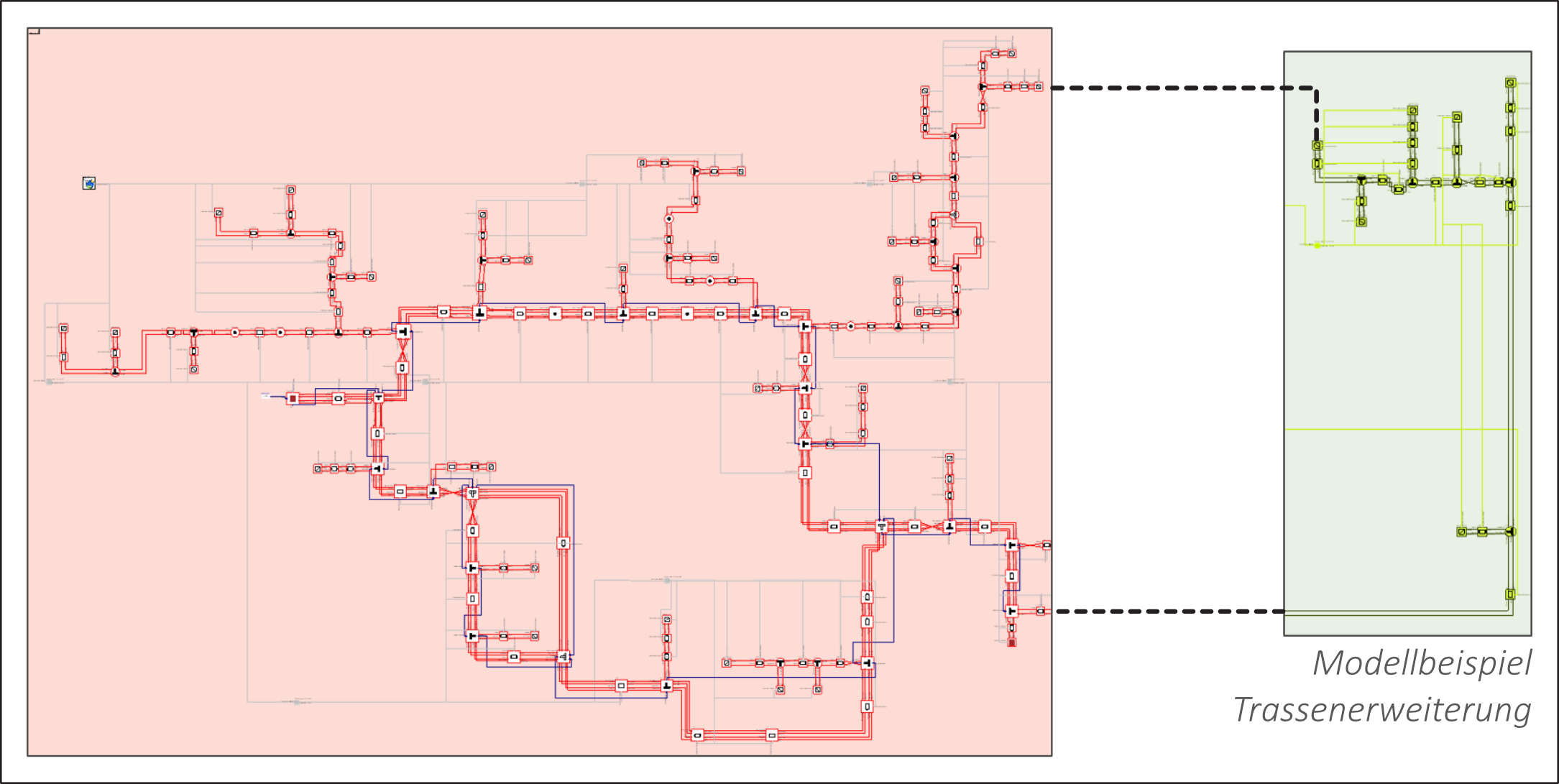

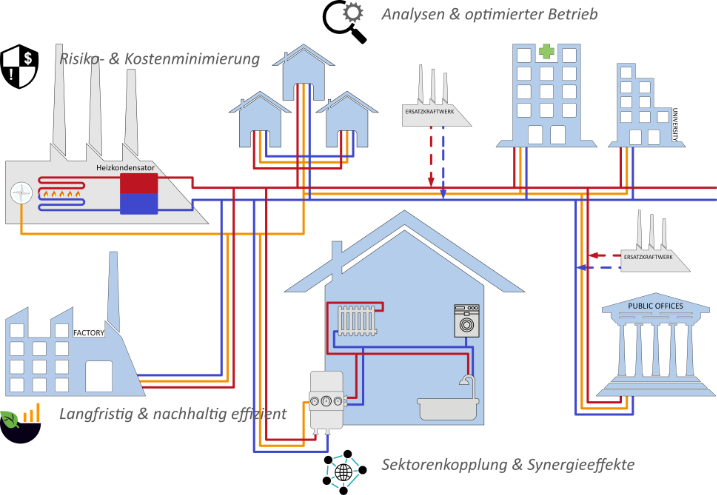
District heating network simulation is a long-term, sustainable method for optimizing existing supply networks and planning new pipeline sections and district heating networks. Current and future questions and decisions, such as the decarbonization of supply networks and the energy transition itself, continually create new conditions for a forward-looking energy supply. Against this background, EA Systems Dresden GmbH’s engineers developed the District Heating Grid simulation library. Their expertise and this powerful tool allow a broad range of scenarios, questions, and challenges associated with the energy transition to be simulated and addressed through models over the long term, both when optimizing existing networks and when redesigning or extending pipeline routes.
Are You Facing Complex Questions That Conventional Calculation Methods Cannot Answer?
- Where are the least-favorable pressure points and critical areas in the district heating network?
- Where are the shifting flow stagnation points within the district heating network?
- How does the district heating network behave at different points and times under different conditions?
- What is appropriate pipeline and plant sizing for the newly planned network?
- Is operating a heat pump in combination with cooling or thermal storage worthwhile?
- Can several smaller district heating networks be combined into one larger network?
- How do hydraulic conditions change when several small district heating networks are combined into a larger one?
- What supply and return temperatures should be used to ensure efficient heat supply?
Optimizing Existing Networks
Critical Point Analysis
- Identification of critical network areas
- Optimization of critical network areas
Load Profile Analysis
- Creation of load profiles
- Determination of demand and consumption
Control Concepts
- Dynamic network simulation
- Assessment of control behavior
Optimal Marketing
- Determination of heat and electricity revenue opportunities
- Profitability forecasts
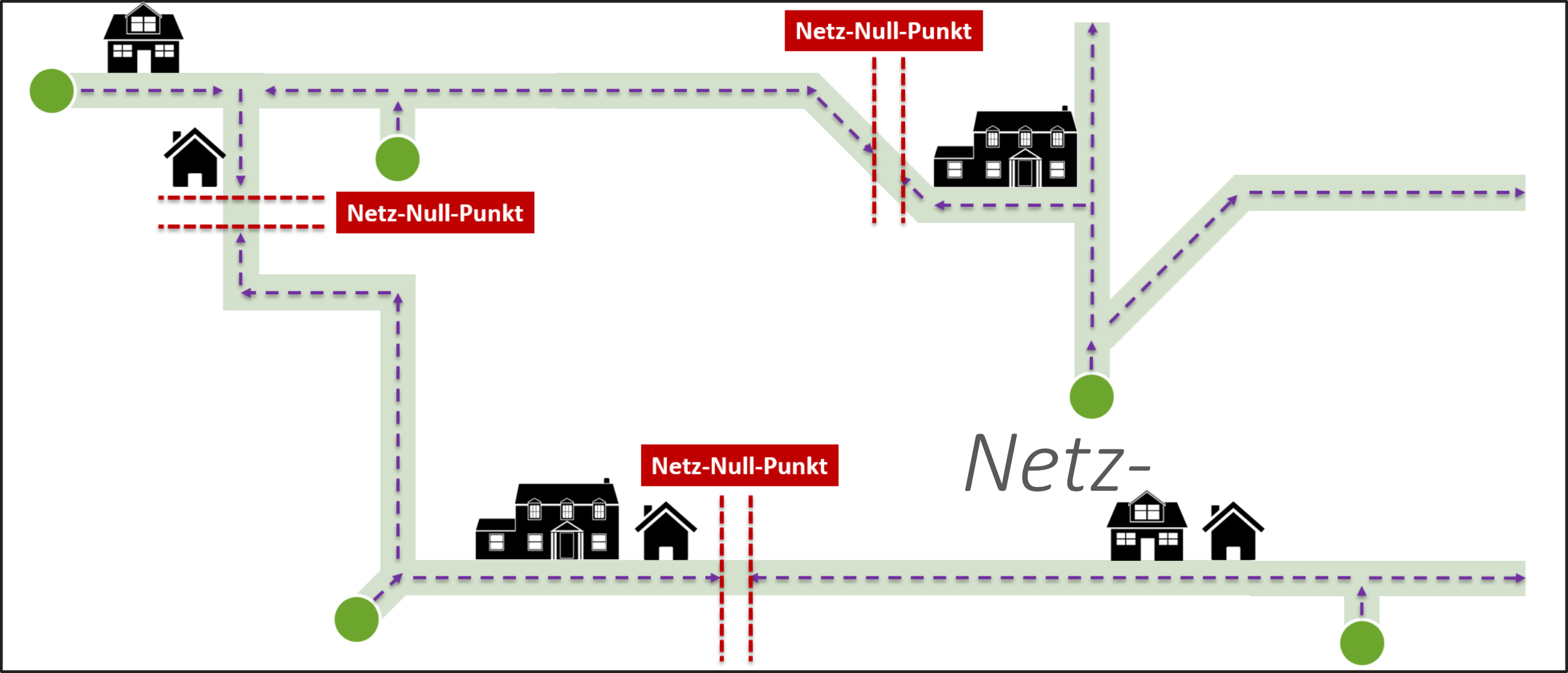
Shifting Flow Stagnation Points
- Investigation of multiple feed-in sources and dynamic control
- Assessment of the impact on network hydraulics
New Network Planning / Pipeline Expansion
Requirements Analysis
- Technical components and plants
- Heating and cooling supply and storage
Feasibility Analysis
- Existing supply concepts
- CO₂ and energy-saving potential
Pipeline and Plant Sizing
- Preliminary analyses
- Demand-based concept development
Comparison of Different Supply Models
- Conventional, partly renewable supply
- Optimized scheduling and recommended measures
Sector Coupling and Combined Heat and Power
- Integration of different supply concepts
- Integration of renewable energy, electromobility, and hydrogen