

We offer energy utilities and providers optimization options for heating networks, whether local, district, or ambient-temperature networks, serving municipalities, large district towns, and cities. We use models to analyze the hydraulic and thermal behavior of the entire network. With a broad range of services and the necessary expertise in district heating network simulation, we are well equipped to support the optimal use and operating strategy of your heating network.
Our Services
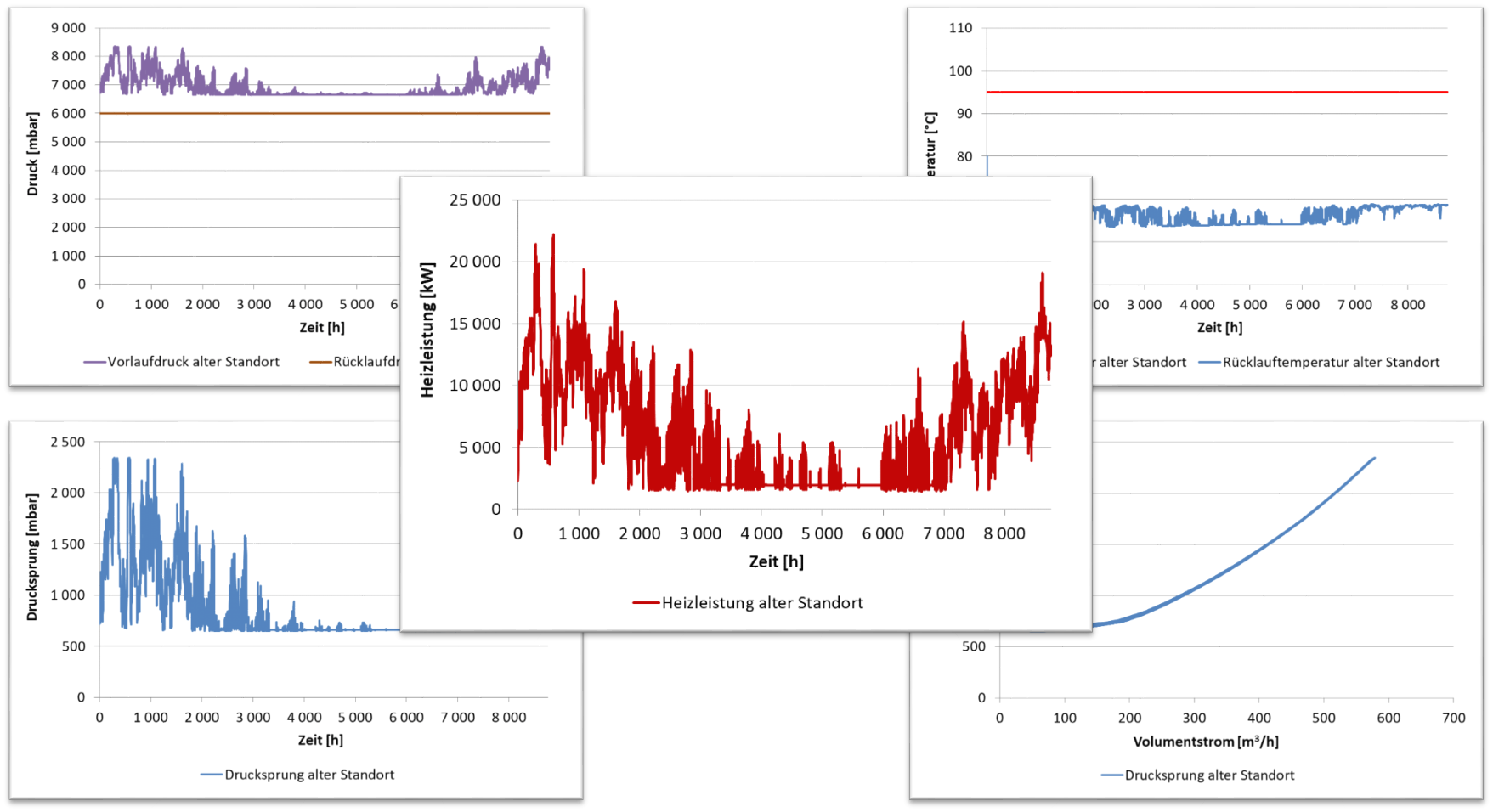
- For district, local, and ambient-temperature heating networks
- Modern control algorithms and sector coupling
- Critical point analysis
- Load profile analysis
- Shifting flow stagnation points
- Optimal marketing
- Sophisticated control concepts
Your Benefits
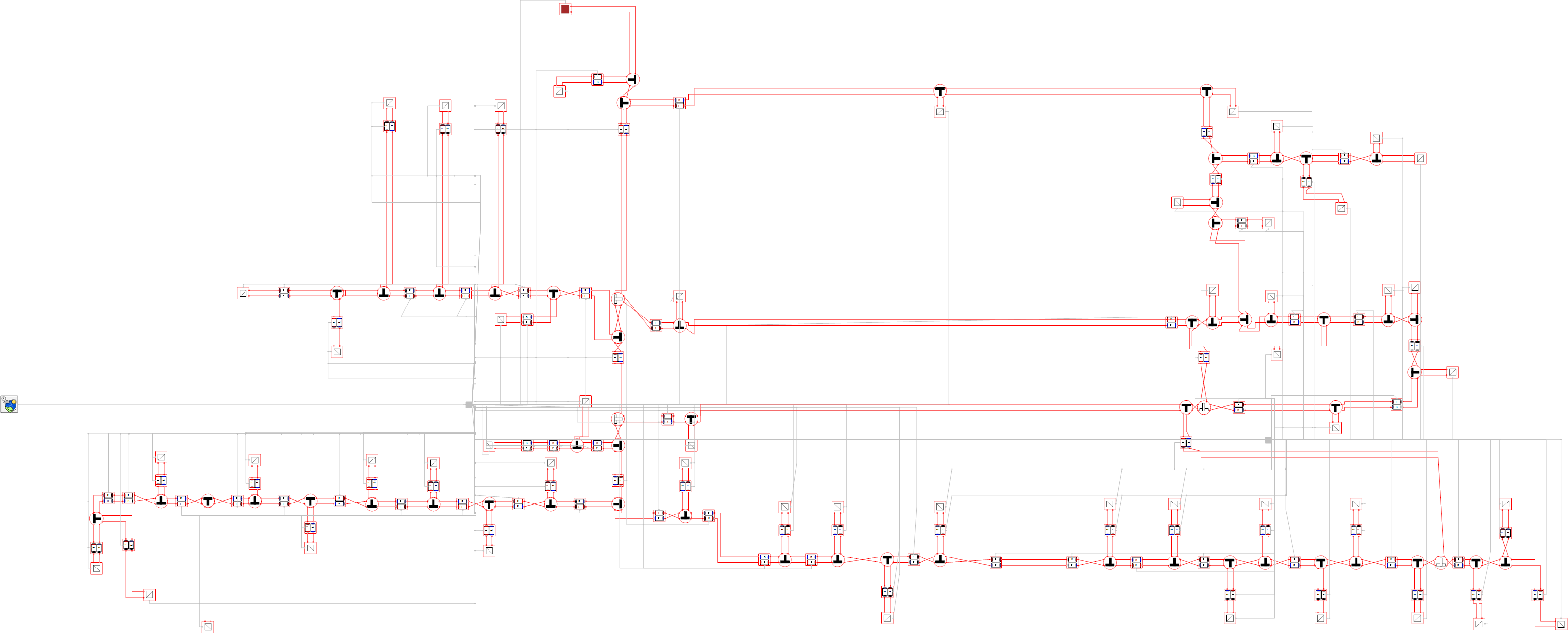
- Capture complex generation, consumption, and transmission structures
- Support your decisions with validated information
- A modern, cost- and energy-efficient network
- Compare different alternatives, potential operating strategies, and fault scenarios
- Clear guidance for designing a more flexible heating network
- Integration of renewable energy
- Making full use of potential funding opportunities
A well-coordinated team with the right expertise and experience in the field uses the right tool to solve your problem!
Some of Our Services in Detail
Critical Point Analysis
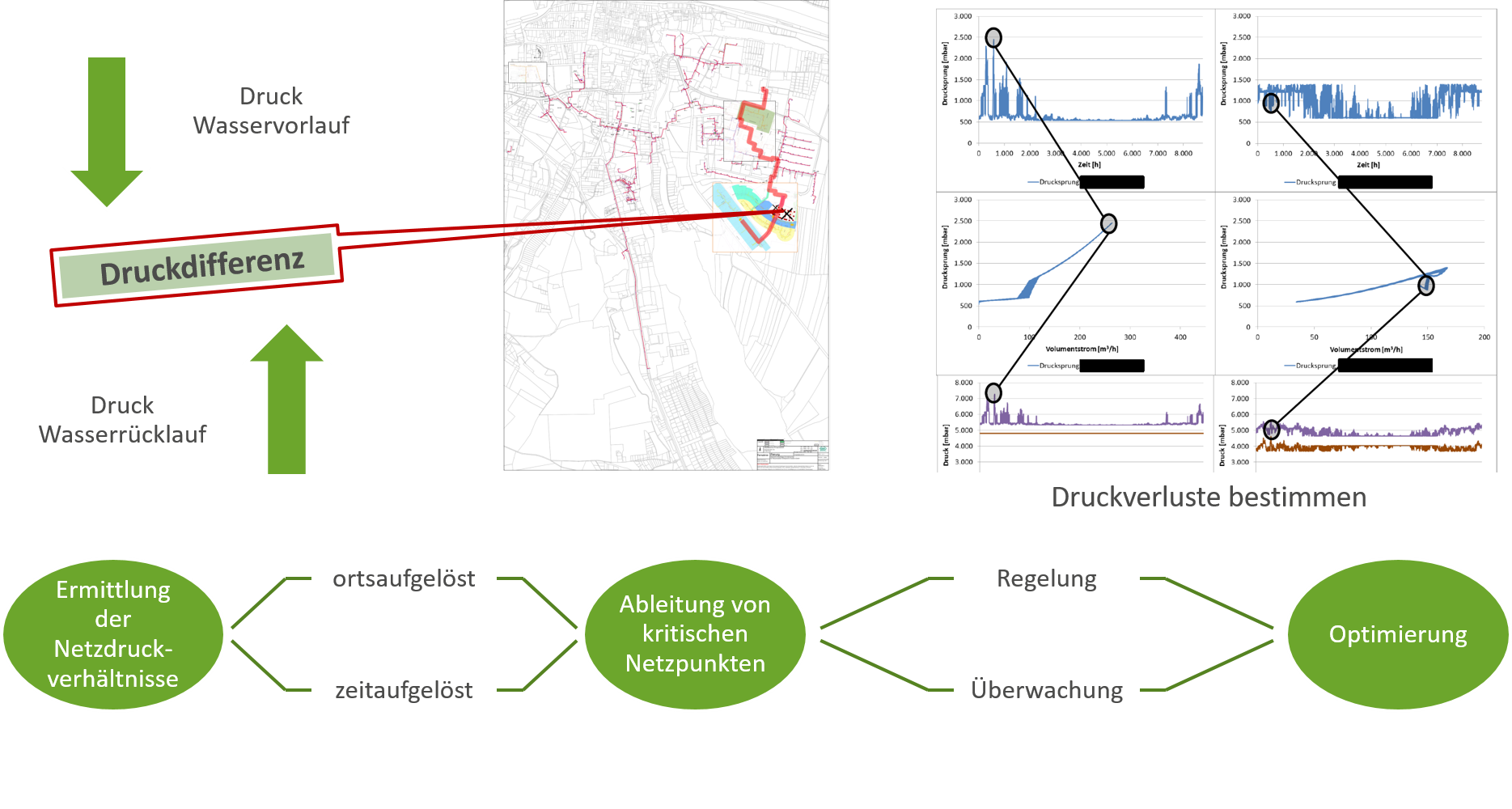
Critical point analysis is an effective method for determining pressure conditions within a heating or cooling network dynamically and at specific locations.
Load Profile Analysis
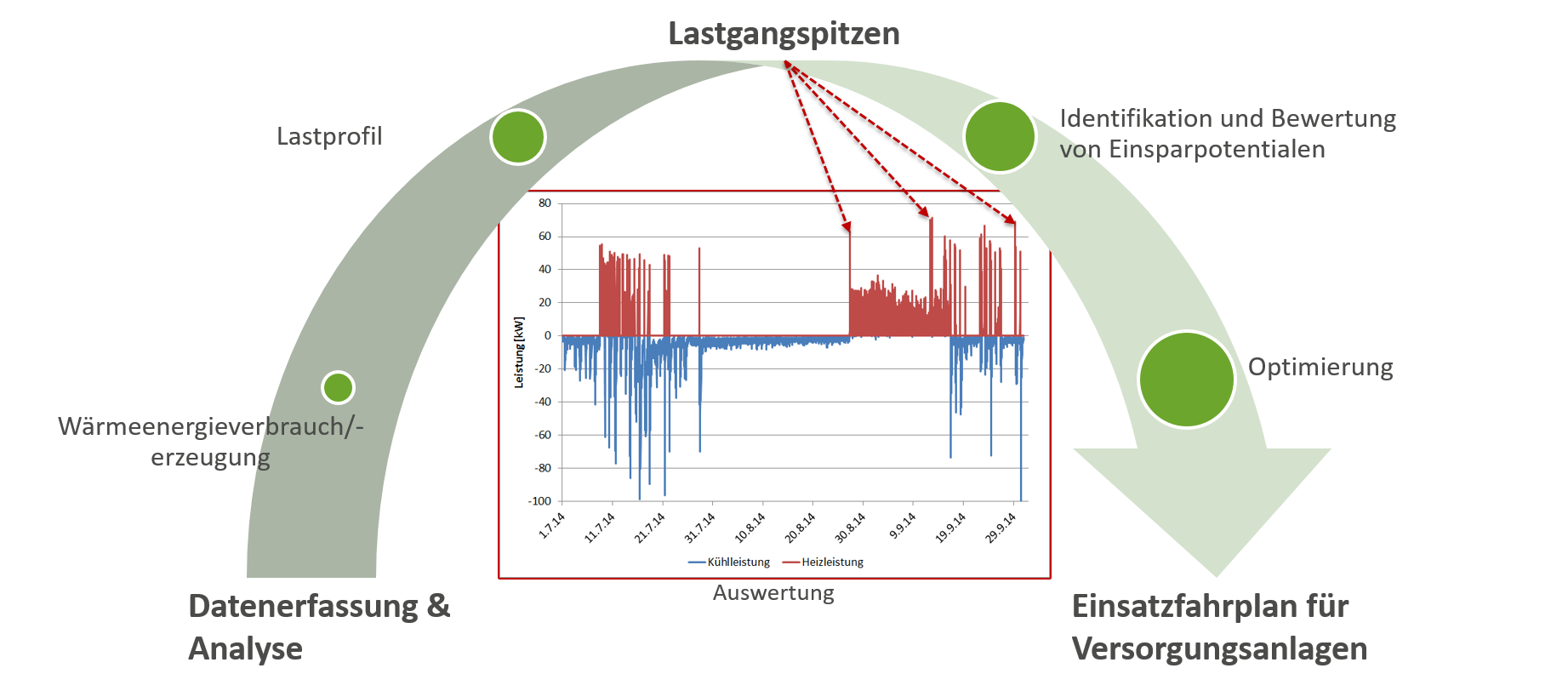
Load profile analysis determines the profiles of heat consumers and generators and identifies and reduces peak loads. These results can be used to generate an optimal operating schedule for supply plants.
Flow Stagnation Points
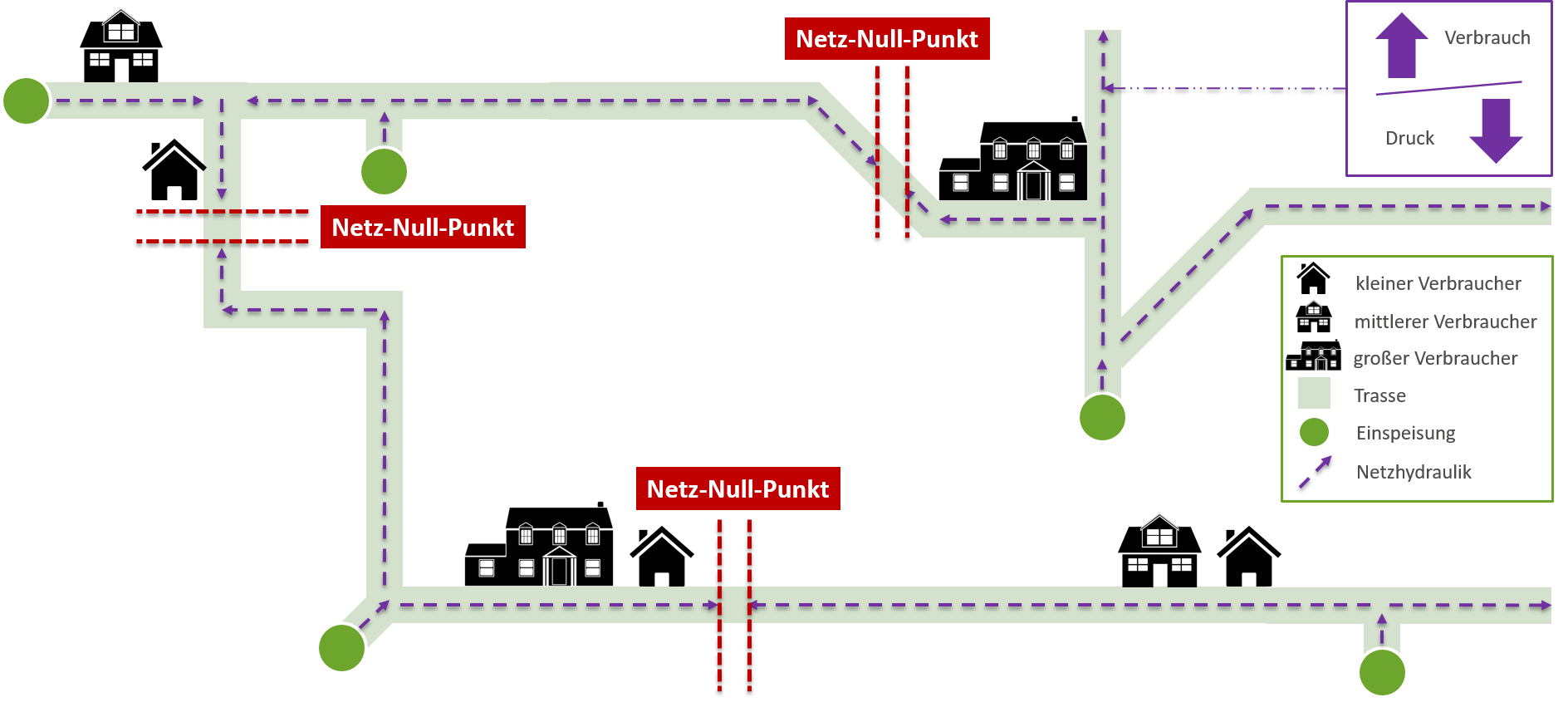
Simulation enables the assessment and optimization of mass flows in your network. By examining dynamic pressure interactions and multiple feed-in sources and their effect on network hydraulics, we quickly and reliably determine the network’s flow stagnation points.
Direct Marketing and Profitability
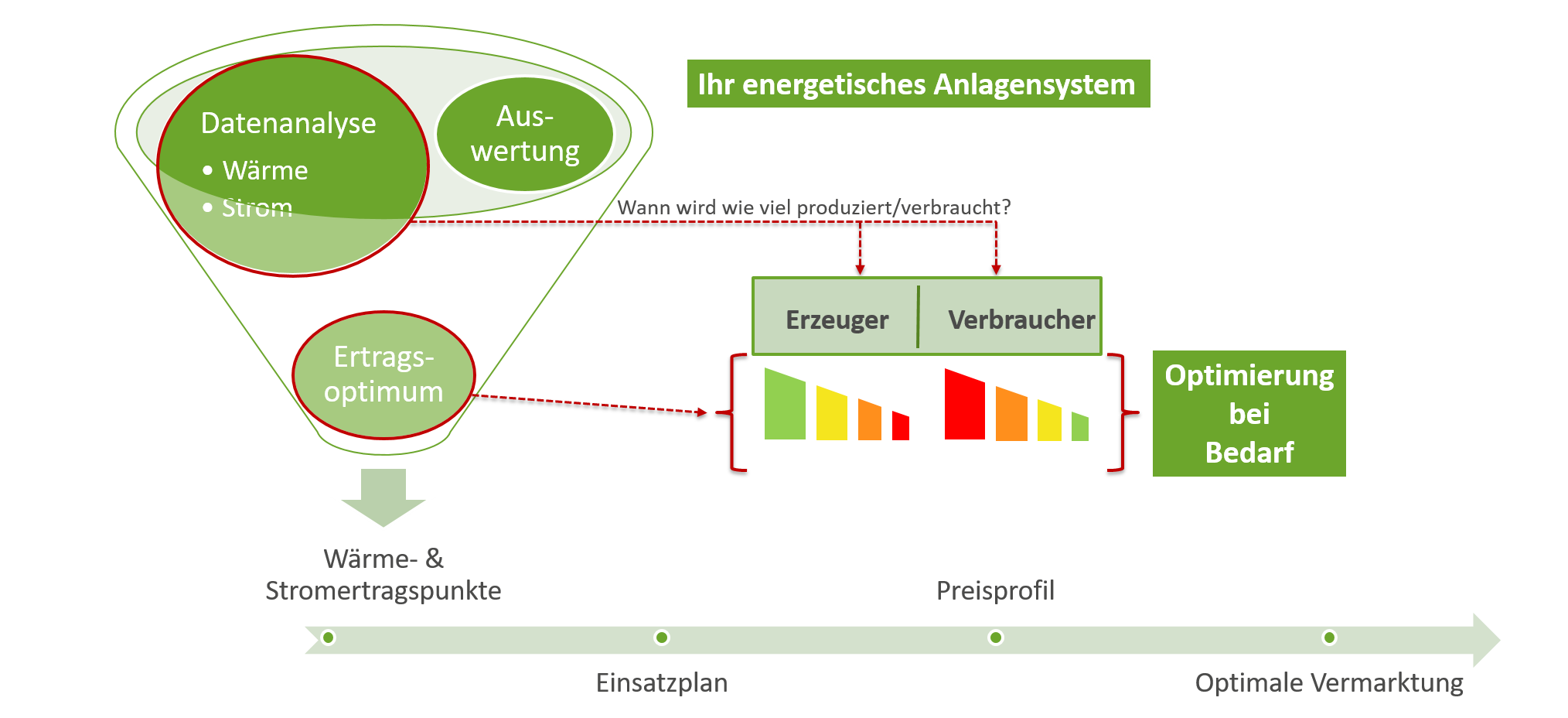
Using modern simulation algorithms, we determine the heat and electricity revenue opportunities in your network. This provides the basis for creating a price profile and optimal dispatch plan to identify the best time for marketing.
How Modeling and Optimizing Your District Heating Network Could Work
Work Package I: Establishing the Baseline – Network Topology
- Compilation of all available network data together with you, using a checklist
- Assessment of the heating network’s current condition
- Controller-based evaluation of incoming measurement data
Work Package II: Detailed Measurement Data Acquisition for District Heating Network Assessment
- Determine supply temperatures, accounting for the physical distance between measurement points
- Measure heat and electricity generation in the central heating plant
- Evaluate measurement data; develop a measurement concept and install measurement equipment
- Calculate costs based on data availability
Work Package III: Identifying and Assessing Savings Potential
- Options for reducing supply temperatures, savings potential, constraints, assessment of supply security, weather-compensated temperature control
- Savings potential in plant equipment (auxiliary energy consumers, pumps)
- Assessment of plant runtime, control optimization, savings potential, and peak loads (electricity/fuel demand)
- Action plan with prioritization
Work Package IV: Comparing Alternatives for Technical Modernization
- Development of supply alternatives based on the actual supply task
- Assessment of the planned supply under different operating conditions, usage scenarios, and price developments
- Analysis of potential for integrating renewable energy, storage plants, and additional CHP systems
- V1: Simple comparison of supply alternatives using monthly balances, cost estimates, and payback calculations
- V2: Simulation and comparison of system behavior with different control strategies, cost analysis