- Period:
- 07/2024 – 03/2026
- Client:
- Stadtwerke Riesa GmbH
- Partners:
- DNV Energy Systems Germany GmbH
Investigating Two Existing Heating Networks Together
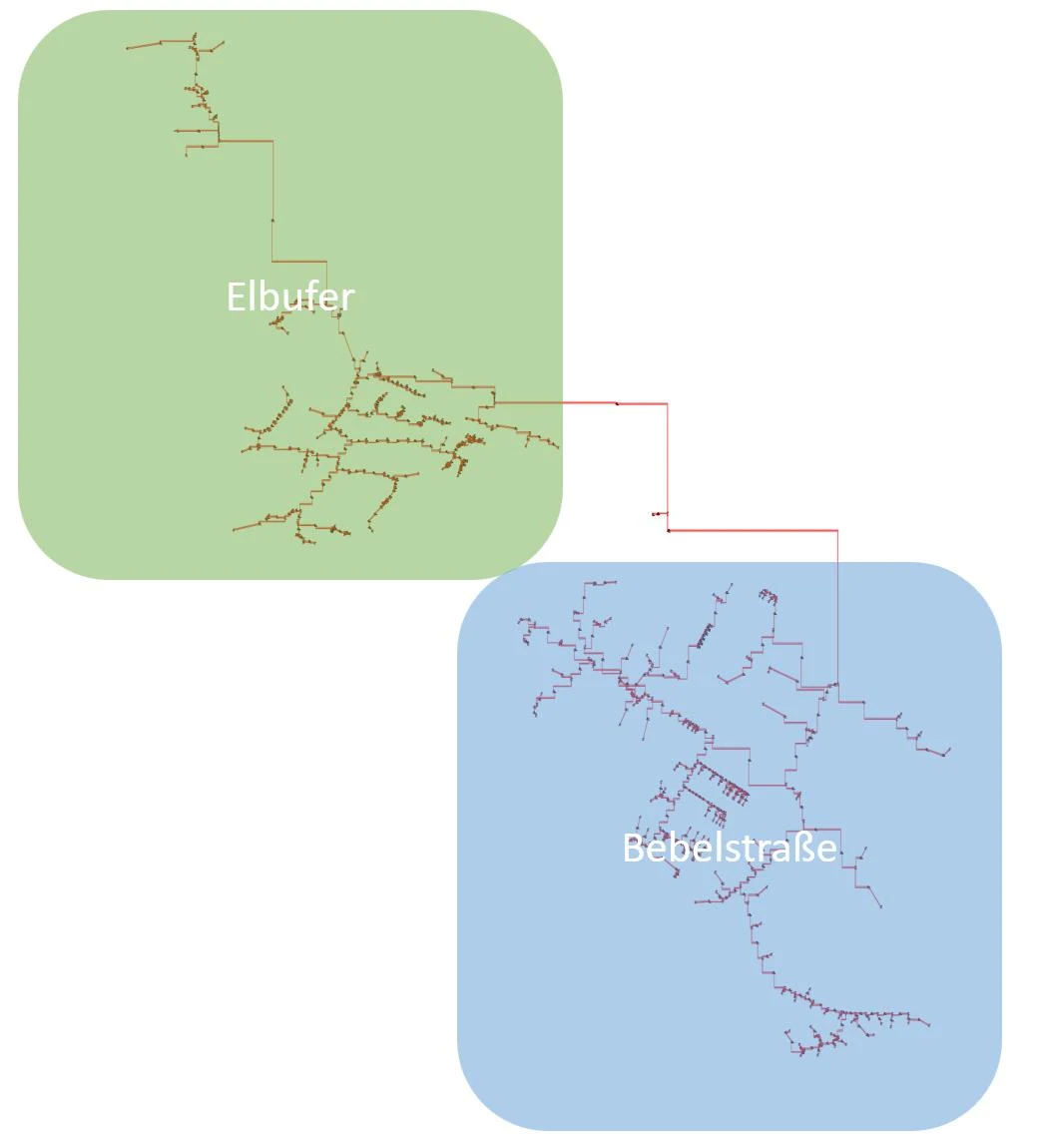
As part of Stadtwerke Riesa’s transformation planning, the existing Elbufer and Bebelstraße district heating networks were to be analyzed and developed into a combined network. EA Systems implemented the concepts developed by DNV and the utility in dynamic network models and assessed the proposed alternatives. The project was referred through GESA – Ingenieurgesellschaft.
GIS-based models of the current condition were first created for both networks and calibrated against existing measurement data. A model of the planned target network was then developed. The focus was on the hydraulic and thermal effects of combining the networks and integrating an additional heat source.
Key Areas of Work
- Creation of GIS and dynamic network models
- Hydraulic and thermal analysis of the current condition
- Integration of a heat-led heat pump to utilize additional waste heat
- Connection of the two existing district heating networks
- Assessment of network pressures and required hydraulic separation
- Assessment of potential supply and return temperature reductions
- Analysis of pipeline utilization and network cooling
- Modeling potential network expansions for new clients
Target Scenario and Follow-Up Investigation
Hydraulic integration and control of three generation sites and compliance with allowable pipeline utilization were key constraints. DNV and Stadtwerke Riesa selected a target scenario based on the comparison of alternatives. EA Systems then modeled and simulated this scenario; the results were incorporated into DNV’s transformation plan.
The main project ran from July 2024 to November 2025. In a follow-up investigation in March 2026, existing models were reused to assess relocating pressure maintenance to a new site. This enabled verification of the sizing of an unpressurized balancing tank and investigation of the impact of dynamic network processes on pressure maintenance.