
- Period:
- 10/2024 – 05/2026
Planning Heating, Cooling, and Steam Together
EA Systems supported Rücken & Partner Ingenieure GmbH with heat supply planning for the MPI Göttingen campus at Faßberg. The campus consists of 16 buildings, mostly supplied with heating, cooling, and steam through central distribution networks. The existing supply is predominantly based on natural gas and is to be gradually converted to an energy supply with as little CO₂ as possible.
Existing plant equipment was first surveyed during site visits, and the building interfaces to the central energy supply were documented. The baseline analysis established technical constraints for further concept development, including a preference for decentralized steam generation and continued use of existing pipeline routes.
Building-Specific Load Profiles as a Planning Foundation
Hourly heating and cooling load curves were created for individual buildings using existing measurement data. This enabled simultaneous demand, peak loads, and seasonal shifts to be taken into account and the supply concepts to be compared on a common data basis.
Supply Concepts Investigated
Four alternatives were developed for future supply:
- Three heat pump concepts using existing waste heat
- Different distributions of central and decentralized plant equipment
- Different temperature levels for heating and cooling networks
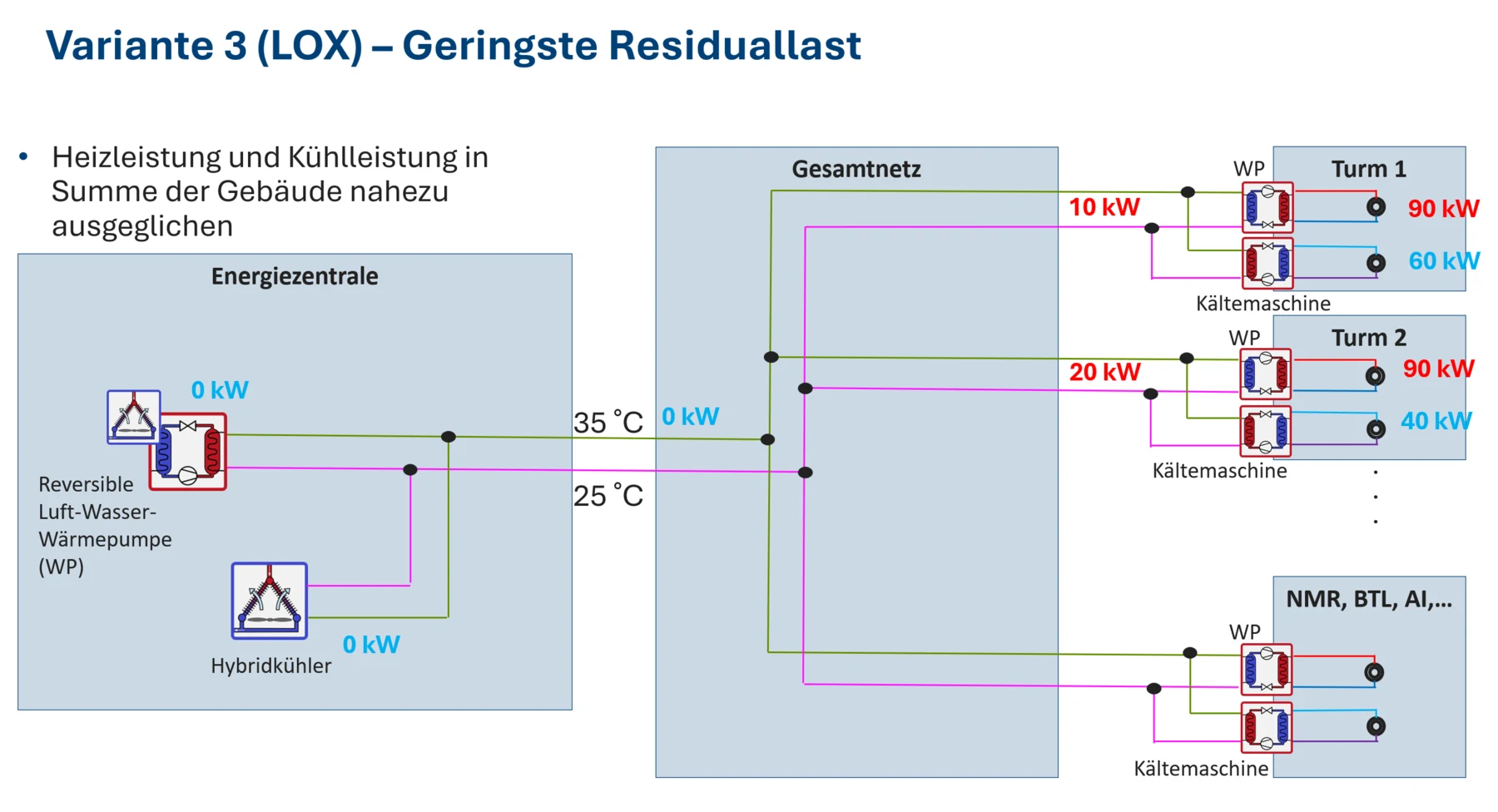
- Complete conversion to a low-exergy network with variable temperature levels
- Hydrogen as a fourth alternative for comparison
The heat pump concepts differ in the distribution of central and decentralized equipment and in network temperature levels. The low-exergy concept uses the time-dependent balance between heating and cooling demand to make waste heat available for heating within the campus.
Assessing Alternatives and Preparing Implementation
The alternatives were compared using energy and economic indicators and their technical feasibility. The economic assessment included investment, operating, and expected CO₂ costs. This provided the basis for selecting preferred alternatives and potential conversion pathways during ongoing campus operation and developing action plans for implementation.
Key Areas of Work
- Survey of existing heating, cooling, and steam supply
- Documentation of building interfaces to the central energy supply
- Creation of building-specific hourly heating and cooling load curves
- Development of renewable supply concepts
- Energy and economic comparison of alternatives
- Assessment of technical feasibility
- Development of action and conversion plans